Knight Management Center Continues to Support Unique Learning Experiences
The Knight Management Center was designed to maximize outdoor interactions, because, as one professor puts it, “classrooms can be confining.” | Photo by Elena Zhukova
Nearly 15 years in, the complex still encourages collaboration, innovation, and serendipity.
In April 2011, Stanford GSB relocated from three aging buildings to an eight-building complex set on 12.5 acres. Funding for the $345 million facility was led by Nike founder Philip H. Knight, MBA ’62, who in 2006 contributed the $105 million down payment for the project, the largest gift ever to a business school at that time. Construction coincided with a revamped and more personalized Stanford GSB curriculum that required more — and more varied — classroom space for hands-on instruction, small-group leadership labs, and team-based learning.
The Art of Innovation
Innovation and change are always topics of conversation at the Knight Management Center, and that extends to any discussion of the public art found around its campus.
“This isn’t just a set of buildings where people come to study; it’s a place where people come to learn and change and be transformed so they can change the world,” says Garth Saloner, the Botha-Chan Professor of Economics at Stanford Graduate School of Business, who served as the school’s dean during the center’s construction and opening.
“Philip Knight [MBA ’62], who led fundraising for the center, wanted that message reinforced in a playful and colorful way,” Saloner says. “He didn’t want the art to be haphazard, so we came up with the idea of having a single artist who would design very different pieces, but ones that were thematically tied to one another and aesthetically complementary.”
Five pieces of art by California artist Peter Wegner were commissioned during the building of the Knight Center.
Monument to Change as It Changes
This is the most familiar — and most photographed — piece of artwork at Stanford GSB. The 3-ton panel occupies a wall in front of the CEMEX Auditorium, and is made of 2,048 sets of colored flaps programmed to produce continuous patterns of ebbing and flowing color.
Monument to Change as a Verb
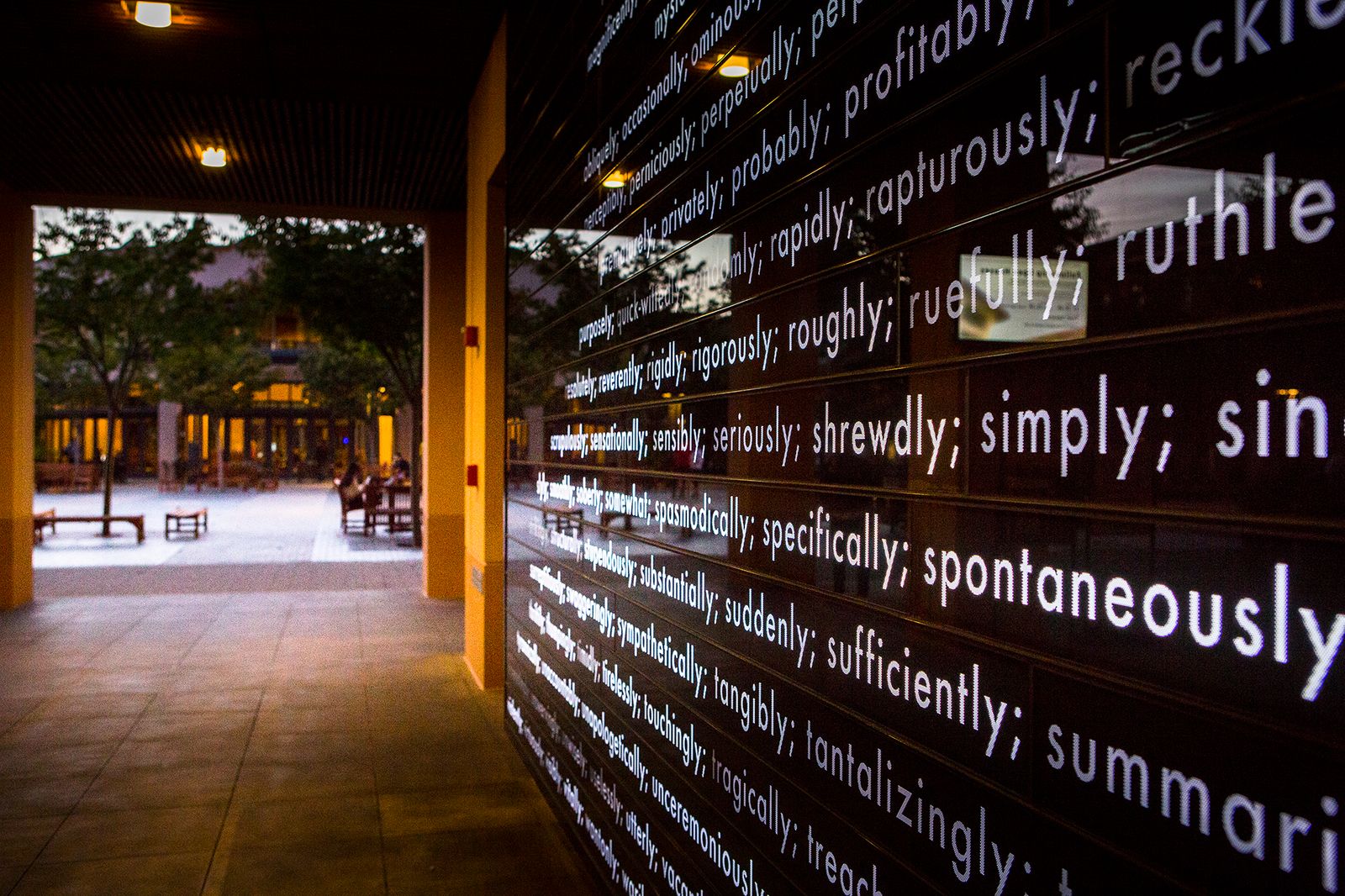
This piece, also known as the “word wall,” features a large screen made up of 300 glossy black panels lit from behind with LEDs. The panels display a shifting collection of adverbs that can modify the verb “change.” Think “fearlessly,” “intangibly,” or “profitably.”
It can be found in the walkway between Town Square and the McCoy Family Courtyard outside the MBA Lounge.
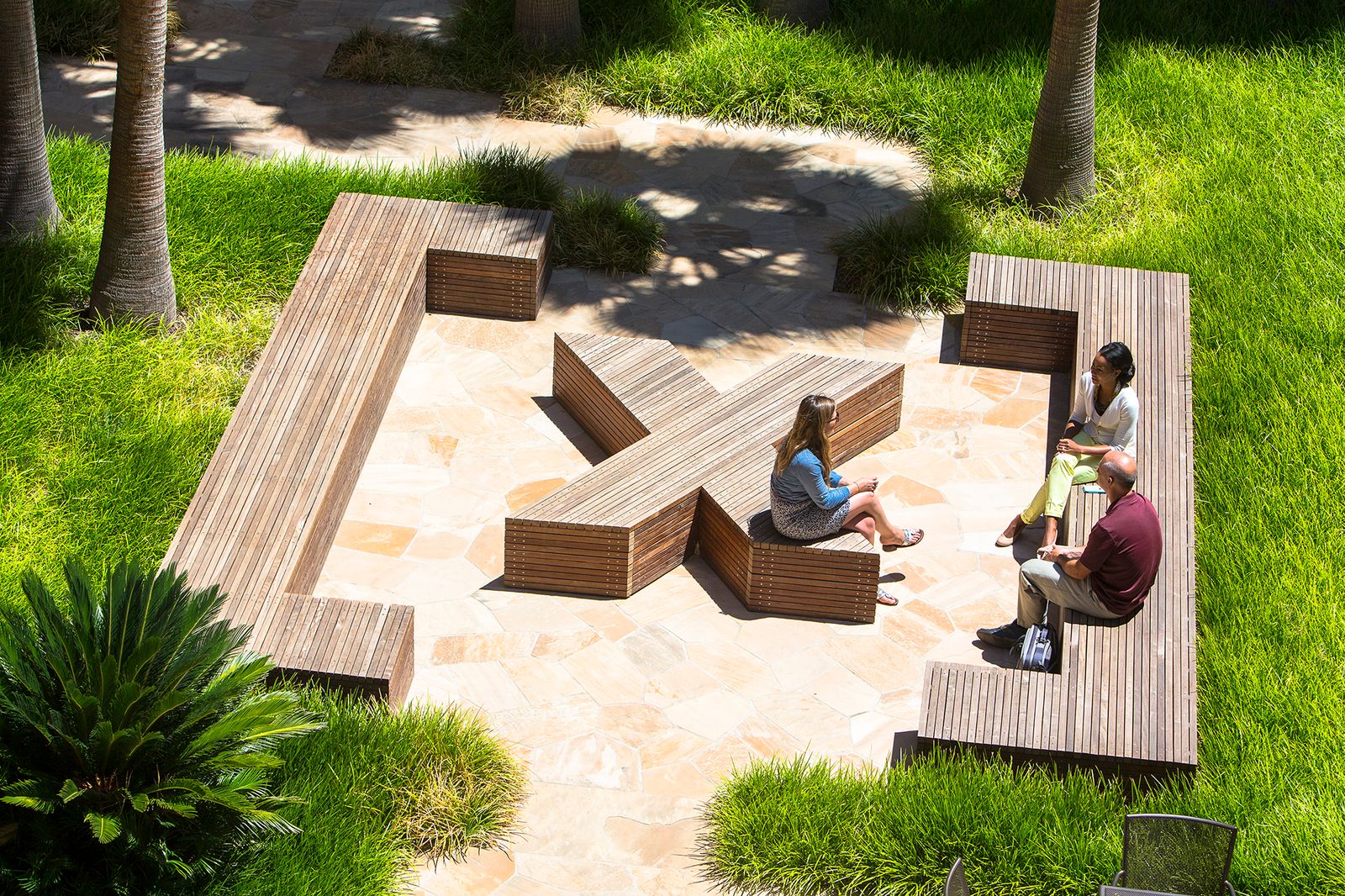
Monument to the Unknown Variables
These well-used benches — in the shape of an X, a Y, and enclosing brackets — are popular conversation spots located in the McCoy Family Courtyard.
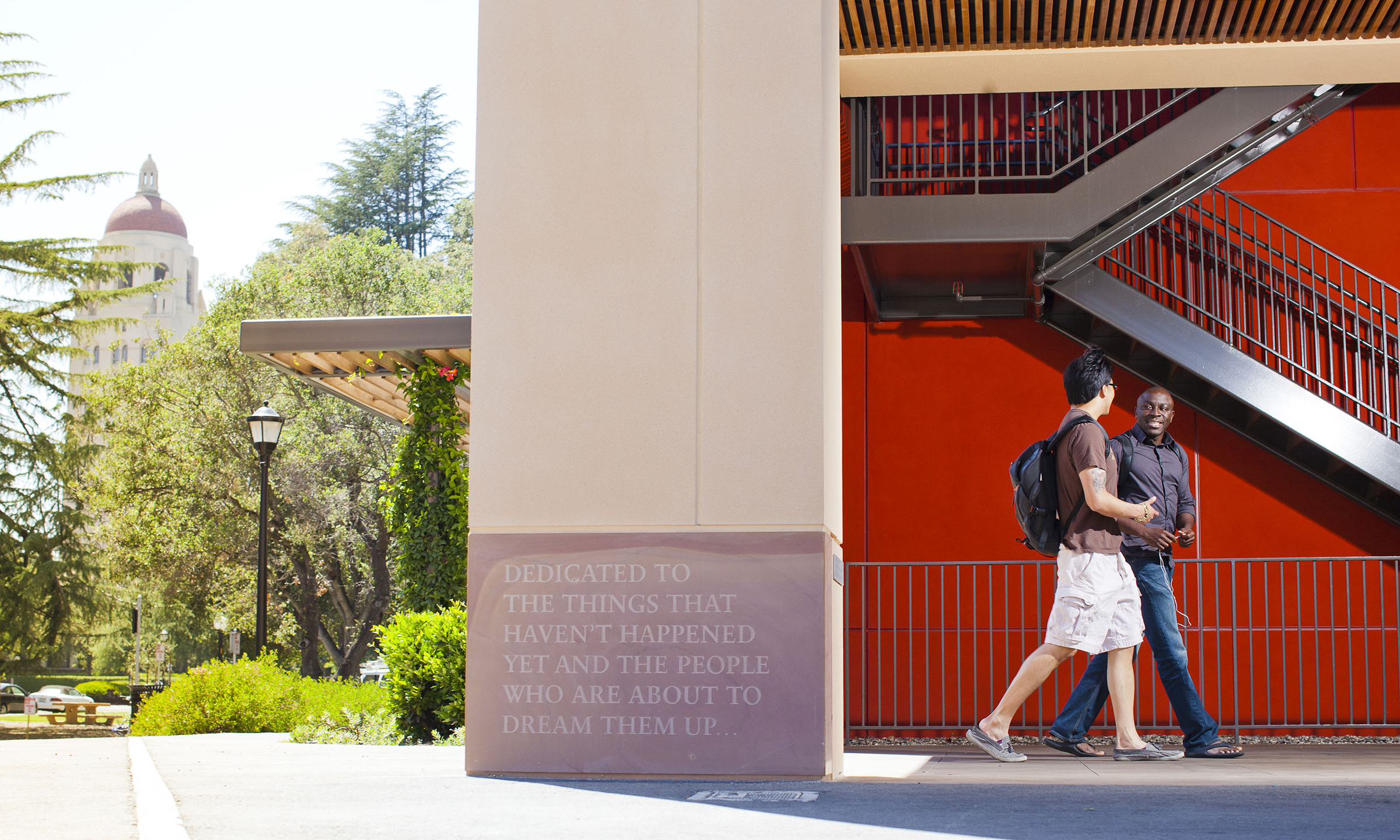
Monument to the Future of Dreams
Located on a column off Community Court on the edge of the GSB campus, this building cornerstone is “dedicated to the things that haven’t happened yet and the people who are about to dream them up.”
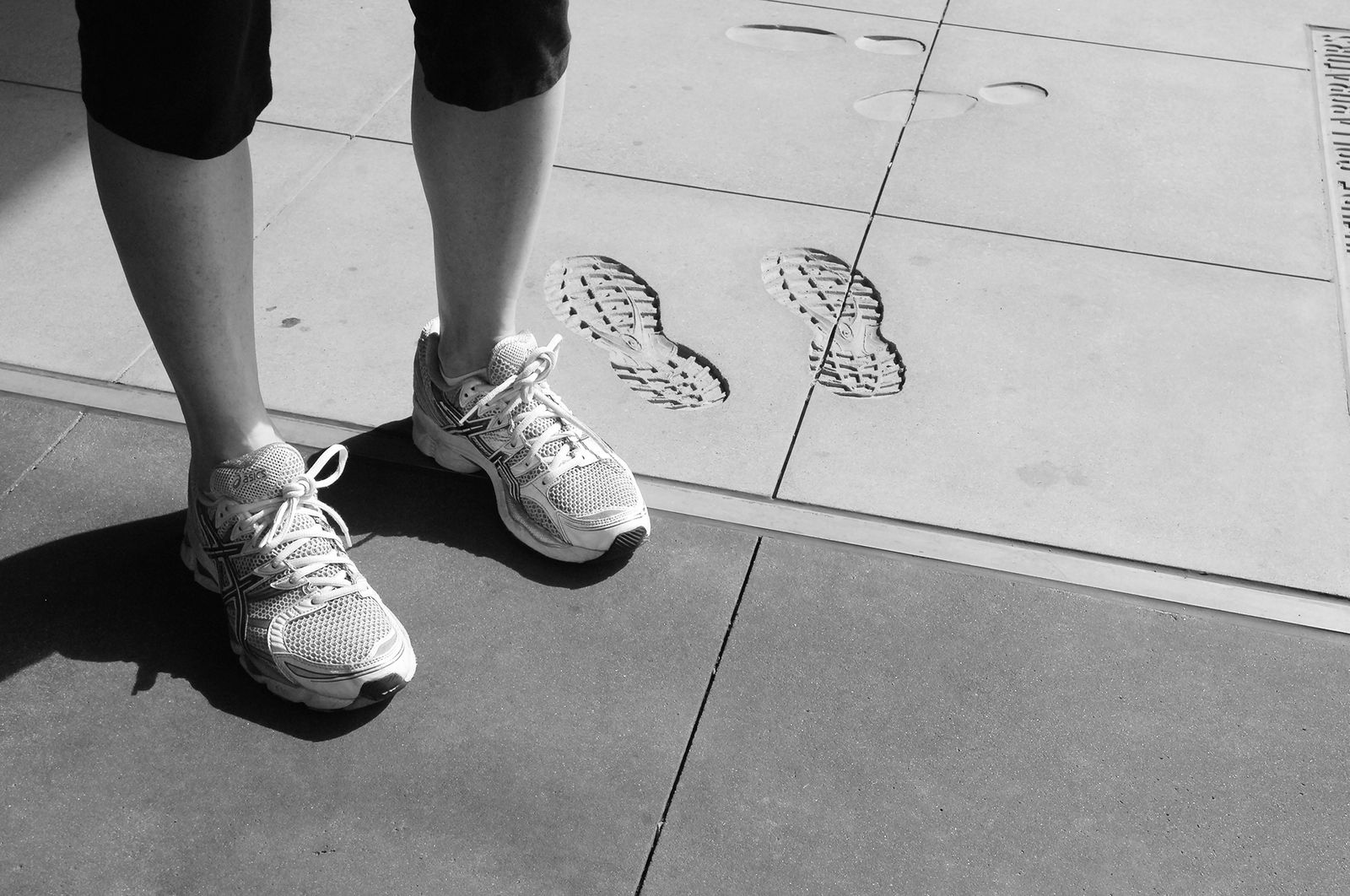
Monument to Your Future Collaborators
This series of footprints is located on the walkway in front of the Anne T. and Robert M. Bass Center, where it urges visitors to avoid standing still, and celebrates those students yet to arrive at the GSB.
Explore Other Art at Stanford GSB
Today, you can see “the birds” at the southwest entrance of the Knight Management Center, as well as other artwork by other artists as you walk under sun-dappled canopies of trees and wisteria.
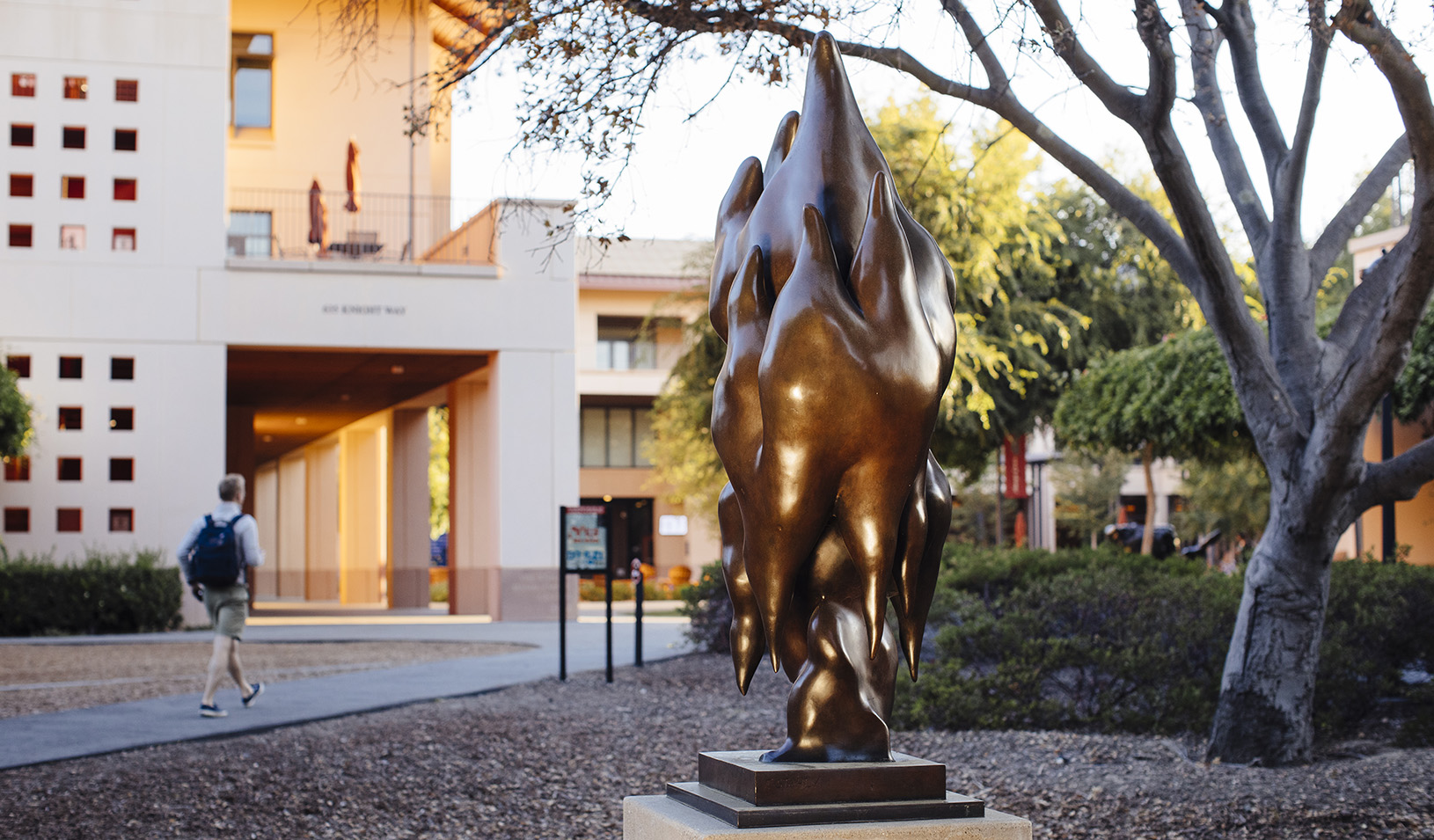
Les Oiseaux Flammes
Located on the west side of the McClelland Building, François Stahly’s 1961 bronze sculpture was relocated from the former GSB grounds.
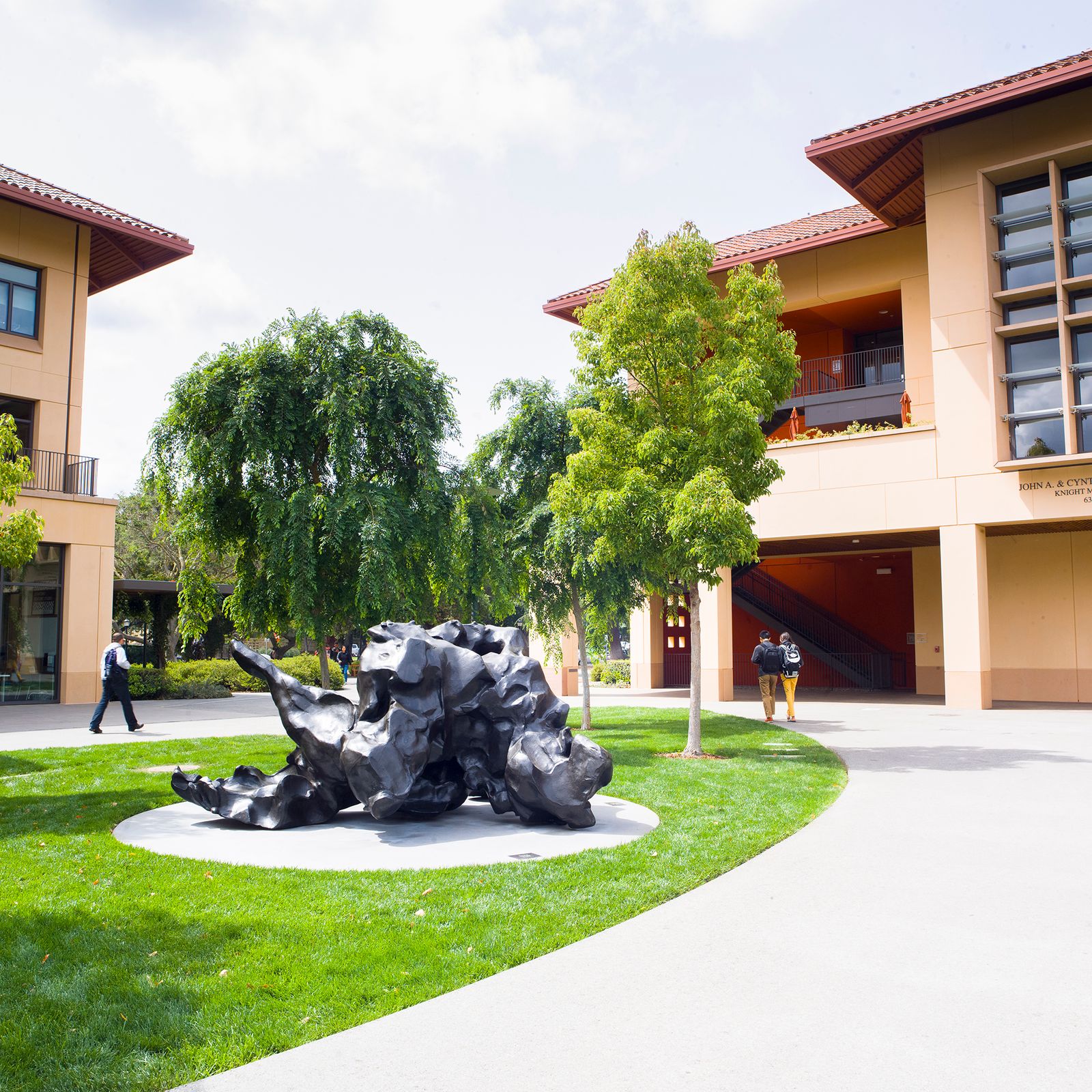
Reclining Figure
This bronze sculpture by Willem de Kooning is located between the Gunn Building and the NGP Co-Lab, and is on loan from the Willem de Kooning Foundation.
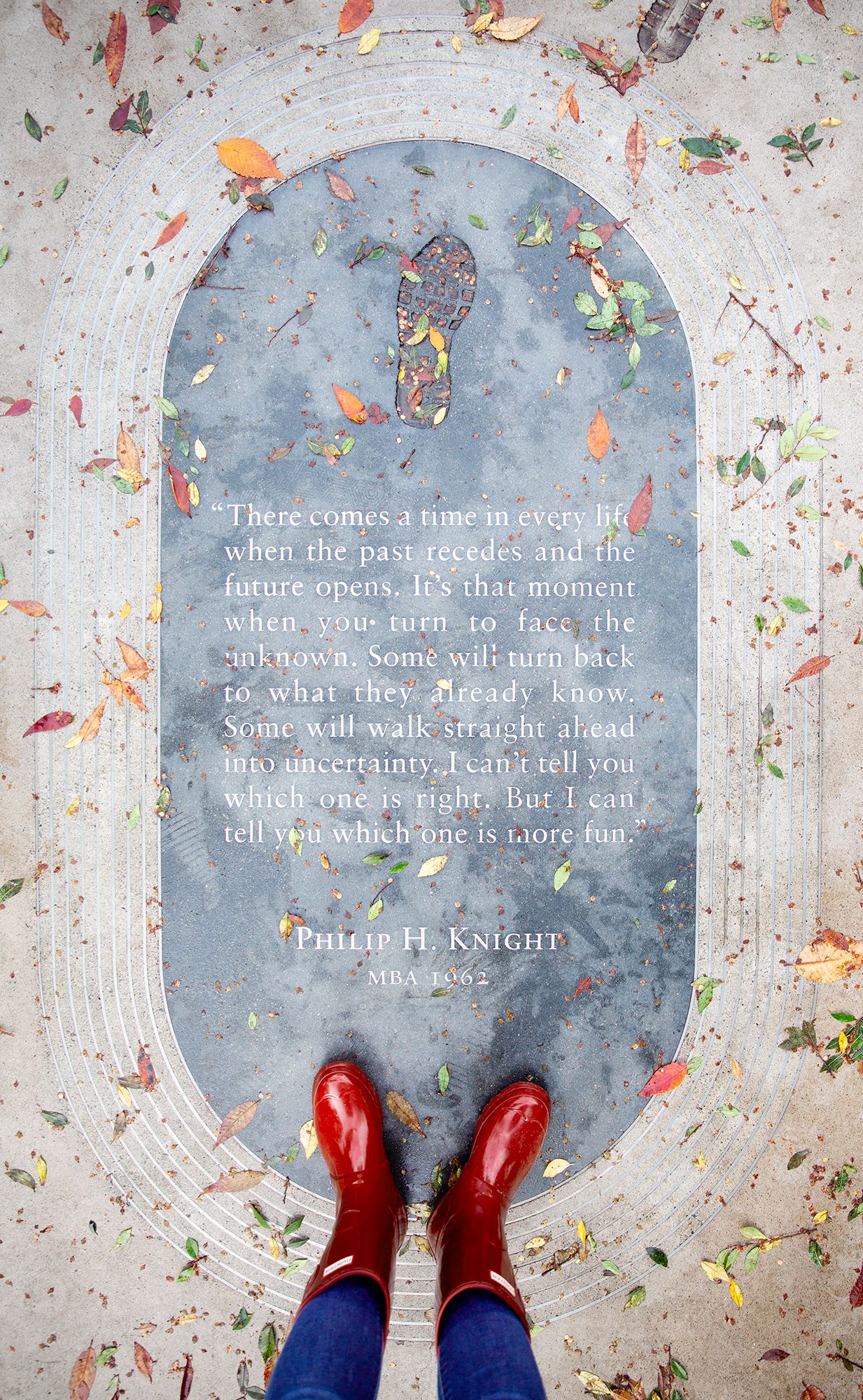
Monument to the Future of Phil
Located on Knight Way at the entrance to Town Square, this gateway piece designed by Steve Sandstrom features a quotation by Nike cofounder Philip Knight beneath his shoeprints, frozen mid-stride.