The online program extends the Stanford GSB experience to promising leaders, helping them keep pace with a changing world.
written by Beth Jensen
Front image: Elena Zhukova | Back image: GSB Archives
In 2014, a company change in leadership gave Saskia Verraes an unexpected opportunity. Verraes had worked for close to a decade in the New Zealand office of one of the world’s largest providers of motor homes and camper vans for the tourist industry. She was head of the program management office when the CEO agreed to allow the impact-focused Verraes to tackle her dream job — implementing sustainability initiatives throughout the company.
“But I knew I’d need different skills to successfully influence the entire organization, not just my small team,” she says. “I had to be able to speak the language and use the tools that everyone was using in our company’s various disciplines, and I wanted to learn the latest on marketing, legal, and tech. That’s how I found the LEAD program.”
A decade after its launch as an unprecedented experiment, Stanford LEAD remains Stanford GSB’s flagship online executive education program, hosting two cohorts of 400–450 business professionals yearly and supporting an active and growing alumni community of over 6,000 past participants in 112 countries.
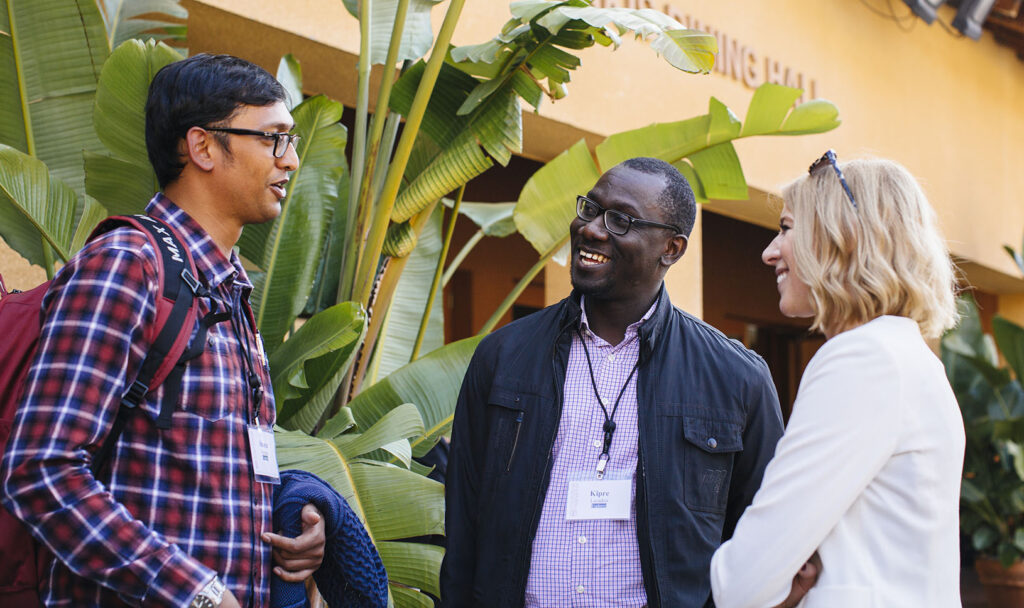
Stanford LEAD has an active and growing alumni community around the world. | Photo by Elena Zhukova
Its success, however, wasn’t always a certainty, says David Weinstein, associate dean at the Stanford Doerr School of Sustainability, who in 2014 led Stanford Executive Education and the LEAD task force. Their mandate was to design a program unlike anything the GSB had attempted before: a highly innovative, one-year educational experience designed to — as much as possible — bring the on-campus MBA experience to experienced business leaders around the globe.
“It was the GSB’s first foray into online education, and a lot of people didn’t think we’d succeed,” Weinstein says. “We wanted to create something immersive and to offer a credential that reflected the rigor associated with the GSB, but we also had to find a way to inject community into the learning experience, because that was core to our MBA program. Nothing like this existed anywhere online at the time.”
A Focus on Human Connection
To begin, the task force focused on understanding the full potential of remote learning.
“Other online programs that existed at that time hadn’t succeeded in creating a community environment where participants could learn from their peers,” says independent education consultant Audrey Witters, who in 2014 served as managing director of online education for Stanford Executive Education. “We focused on that aspect and made sure human connection drove all our decisions about technology, not the other way around. Instead of just asking what tools we could use, we asked each other how we could create real engagement in a virtual space.”
“Creating this community was the real breakthrough. ”
— Peter DeMarzo
The difference between LEAD and the standard massive open online courses (MOOCs) more common at the time was evident; LEAD students encountered an online virtual campus they could explore, course facilitators who proactively and regularly checked in with them, and easy access to a global community of carefully selected peers who embraced experimentation, were on the cusp of moving into more advanced leadership positions, and were excited to experience what Stanford GSB had to offer.
“We wanted to open this program to people who may have dreamed of coming to Stanford but never saw that as feasible,” says Peter DeMarzo, the John G. McDonald Professor of Finance and the founder and faculty director of the LEAD program. “There aren’t many other good examples of this type of program, which includes live faculty and engagement and community-based events, especially in the non-degree space. The quality of materials is top-notch, and our faculty and staff leaned into this experiment along with instructional designers and our media team.”
By the end of the first cohort, students were experiencing the connection the task force had hoped for.
“Creating this community was the real breakthrough,” DeMarzo says. “The power of the program is in large part its students; unlike MBA students who are here for two years, leave, and perhaps come back for reunions, LEAD students don’t leave their platform after graduation. They continue to interact and grow with this community. We’re excited about how well it’s working.”
“Dream Team” Faculty
Today, LEAD has evolved from “a startup within a university” to a proven concept that continues to extend the vision of the program’s creators, says LEAD Director Marineh Lalikian. Its curriculum of eight 8-week courses over one year includes foundation classes in critical thinking, finance, and leadership, along with a wide selection of electives to fine-tune skills, fill knowledge gaps, and address individual needs. Students engage in live and recorded online sessions with senior Stanford GSB faculty; receive personal coaching from course facilitators (many of them LEAD alumni); collaborate with peers in study groups, simulations, role plays, and team projects; and interact with faculty and peers through course discussion boards and live online office hours. Some participants choose to take additional electives following completion of LEAD, and graduates receive a Stanford GSB Professional Certificate.
“For me, the most valuable part of LEAD is the people,” says entrepreneur, senior marketing executive, and author Gabrielle Raymond McGee, who was a member of the 2016 LEAD cohort. “Professors like Jeffrey Pfeffer, Maggie Neale, Jennifer Aaker, Peter DeMarzo, and Stefanos Zenios formed a dream team of mentors I still count on. They aren’t just professors — they’re the heart of LEAD.”
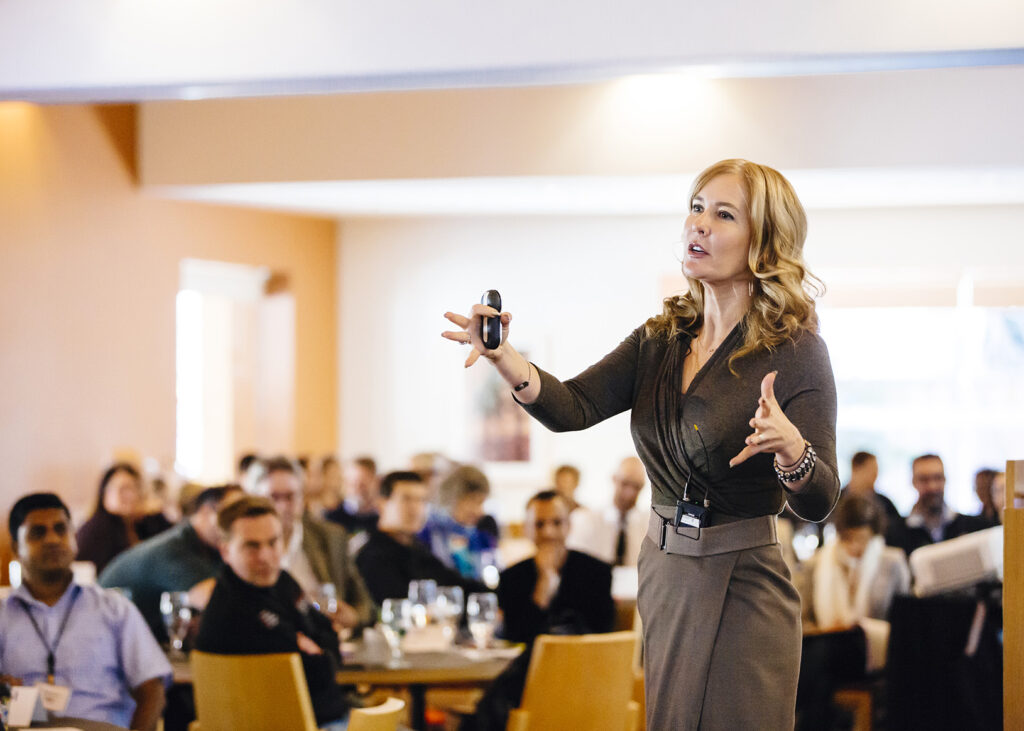
Stanford GSB professors — such as Jennifer Aaker, shown here at a Me2We event — are a key component of the LEAD program. | Photo by Elena Zhukova
The program’s ongoing success and growth can also be attributed to its iterative design, says Lalikian. Unlike an MBA program, where students may not put course material into practice for years, LEAD students are able — and expected — to take what they learn in class and immediately implement their lessons in their workplaces.
“Then they come back and reflect on how it went,” Lalikian says. “They’ll get feedback from a course facilitator, which helps push their thinking even more, and provides ideas on what might be done differently next time. That feedback, in turn, is incorporated the following week in the next step of the course.”
“For me, the most valuable part of LEAD is the people.”
— Gabrielle Raymond McGee
Feedback is also received from cohort members, who are simultaneously applying those same techniques in a vast array of industries around the world, including big tech, science, manufacturing, and healthcare.
That diversity of experience and perspective benefits not only LEAD students but also their instructors, says Sarah Soule, the Philip H. Knight Professor and Dean at Stanford GSB and Morgridge Professor of Organizational Behavior. “The best thing about LEAD is the community, and the way LEAD participants can apply our teaching immediately in their organizations. They’re then able to reflect those results back to us as professors, which allows us to learn alongside them.”
“Your World Gets Bigger”
The program’s launch 10 years ago was unlike anything Göran Broberg had anticipated.
“The LEAD experience at first seemed like a mad experiment,” says the Swedish entrepreneur, marketing strategist, and member of LEAD’s pilot cohort in 2015, which included 85 participants from 40 countries. “Our group included someone running a 10,000-employee eyeglass factory in China, a person operating a large mining operation in Mexico, a senior bank executive from Ghana, and a building professional from Saudi Arabia. But we were all curious and open-minded. Now I believe having access to all these perspectives and experiences is the key reason this program is so successful.”
Participants, nicknamed LEADers, also take part in interest and affinity groups, including the LEAD Incubator Startup Accelerator, or LISA. This all-volunteer accelerator provides LEAD entrepreneurs with coaching from within the community to help establish and scale new ventures. LEADers can also attend regional meetings and the annual Me2We gathering held on the GSB campus, which drew 700 LEAD participants and alumni this year.
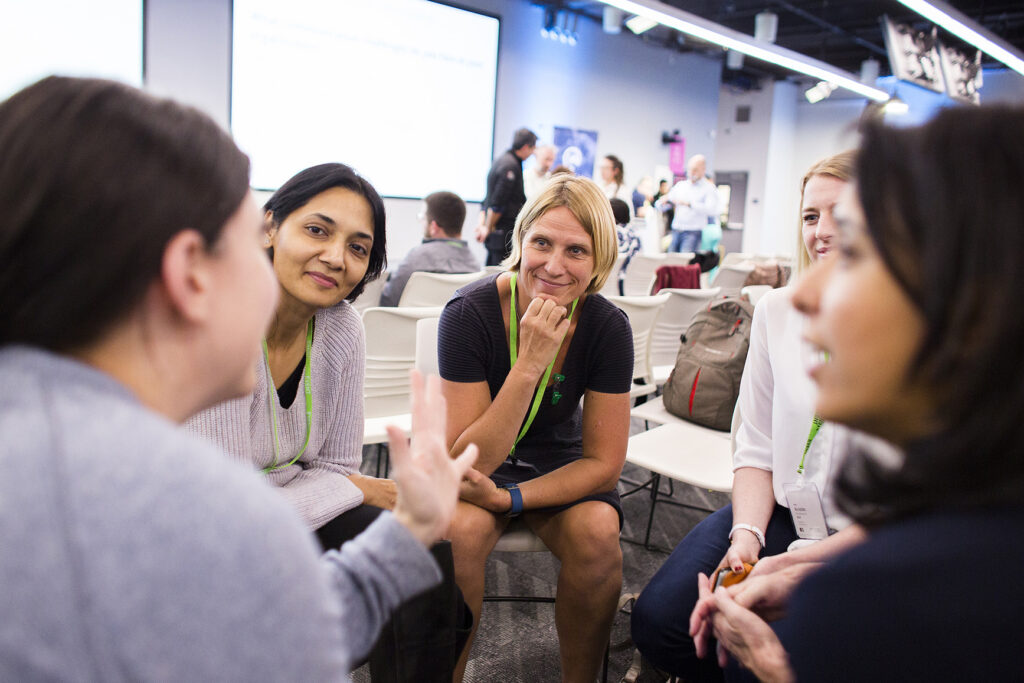
LEAD program participants share varied perspectives and ideas, both online in the program and in person at Me2We events. | Photo by Elena Zhukova
“Once you join the LEAD program, you’re joining the entire community and are invited to be part of all these groups with a mixture of people from past cohorts,” Lalikian says. “It’s really a lifelong journey, with an ongoing opportunity to grow and learn with a global community of peers who have gone through a shared Stanford experience.”
Following LEAD, Broberg found himself making an unexpected shift.
“When you get these tools, it widens your mind, and your world gets bigger,” he says. “While at LEAD I did a simple case study and presentation on insurance. After I graduated, I sought out some innovation support and investors, and launched an embedded insurance company, which I’m still running seven years later. I’d never done anything in this field before and had never built this type of platform. It would never have happened without LEAD.”
As a result of her LEAD experience, Saskia Verraes began implementing sustainability practices throughout her company.
“It’s really a lifelong journey, with an ongoing opportunity to grow and learn with a global community of peers.”
— Marineh Lalikian
“I eventually became chief sustainability officer and part of the company’s executive team,” she says. “We implemented sustainability across the whole organization, not only in New Zealand, but throughout Australia, the US, and the UK. I gained a higher profile and began going to conferences and being asked to be a speaker.”
Today, Verraes serves as director of impact for a New Zealand-based organization providing sustainability consulting services. She is also the cofounder, along with LEAD alumnus Helio Mosquim, of Match4Action, an international nonprofit organization working to connect volunteers with organizations needing help. The group was formed when Verraes challenged her LEAD cohort members to apply their newfound business acumen to a project that could make positive social impact.
“Everything I do now — both in my corporate career and with Match4Action — is related to systemic change to create a regenerative, equal, and just future,” she says.
LEAD’s next decade will likely include additional support and value for the program’s expanding alumni community, says Lalikian. “This program is opening up access to the GSB. We’ll continue to evolve and listen to our participant community as to what that might look like. LEADers are all making a huge investment in their development and growth and are excited to engage with Stanford and each other. They’re taking what they learn and impacting their companies, their communities, and the world. And that’s very, very fulfilling.”
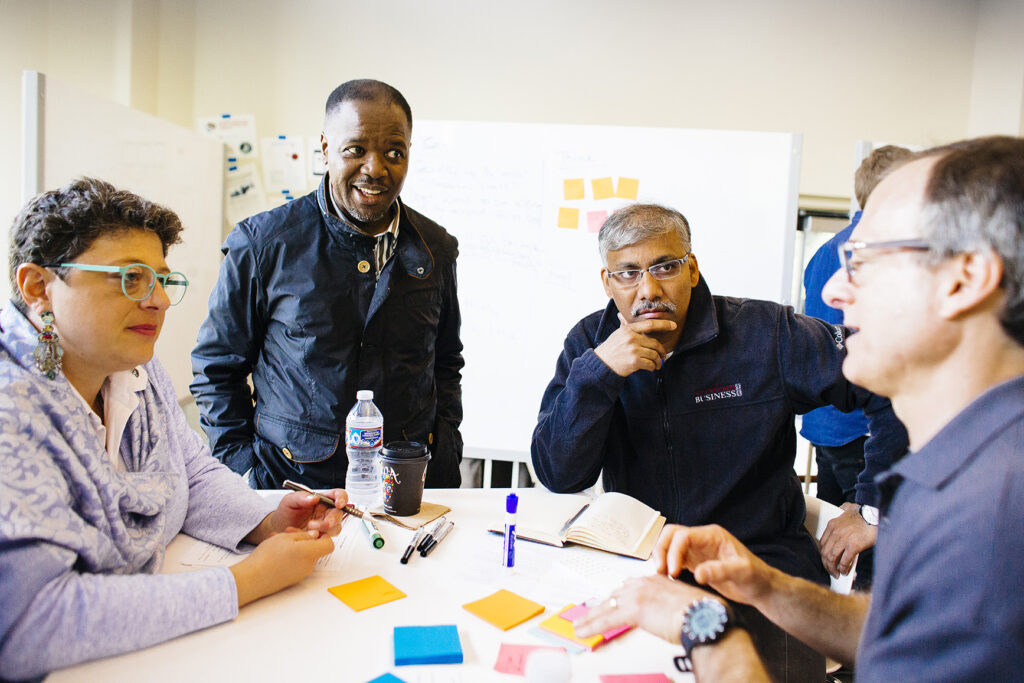
The LEAD community remains active and engaged long after completing the program. | Photo by Elena Zhukova
Me2We Brings Stanford LEADers Together in Person
Each year, hundreds of business professionals and entrepreneurs join Stanford’s online LEAD executive education program to build the leadership skills they need to achieve personal and professional goals. For many, however, the experience doesn’t end once they receive their program certificate.
Me2We, a three-day gathering of the entire LEAD community, has become an annual must-attend for hundreds of “LEADers” who travel to Stanford to meet fellow students in person, network, and enjoy events and presentations.
The first Me2We gathering in 2016 was largely unanticipated, says LEAD alumna and education technology entrepreneur Helena Fragomeni, who graduated from the program’s second cohort.
“The first cohort was about to graduate, and some of the members thought perhaps they’d host a dinner, but suddenly everyone wanted to come and meet each other,” she says. “I was in the middle of my LEAD program and wanted to attend, too. The staff was a little surprised that there was such a big response to meeting in person.”
Surprised, perhaps, since LEAD is designed to be a fully online experience. “We’d debated whether coming to Stanford should be part of the program, but decided requiring that would be in conflict with the idea of an online program,” says David Weinstein, who led Executive Education in 2014. “But participants were determined to host an in-person opportunity to meet their peers and the staff and faculty they’d come to know. It’s become more successful than any of us could have imagined.”
Organized entirely by members of the LEAD community, the event has become extremely popular, says LEAD Director Marineh Lalikian. “It’s become a very special part of the program and grows every year,” she says. “We started from about 100 participants the first year, and this year had 700. We look forward to eventually welcoming more.”
The range of in-person events is a big draw for LEAD alumnus Göran Broberg. “You get to attend numerous talks, including very high-quality lectures from professors,” he says. “We’ve come to know these faculty members personally, so these talks are very fun and enormously rewarding. You also get to meet all kinds of new people from new cohorts, which is amazing.”