A different time and place
1969
To picture how the GSB has changed (and stayed the same), we recreated some classic campus shots — with a modern twist.
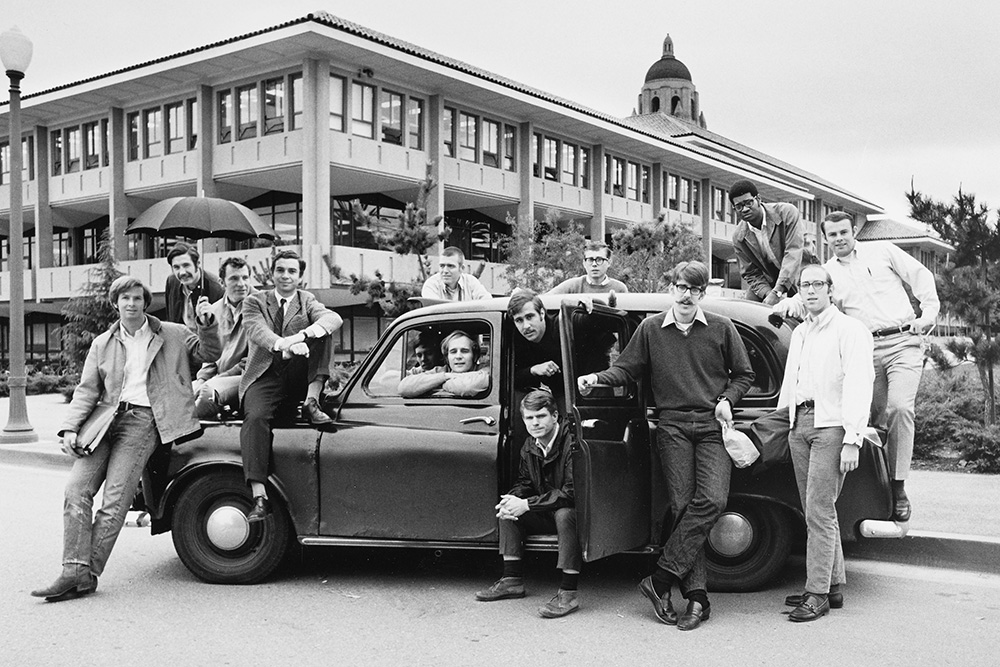
Students in 1969 pose in front of the GSB building, which had opened three years earlier opposite History Corner.
Photo credits: Stanford archives

2025
An electric car, updated fashions, and the Knight Management Center show a view from today.
Cars, clothing, and the campus home might look different — but the essential components of Stanford GSB’s values of excellence, community, and innovation have remained consistent over the years.
Photo credits: @zhuchkin
But the same in essentials
1966
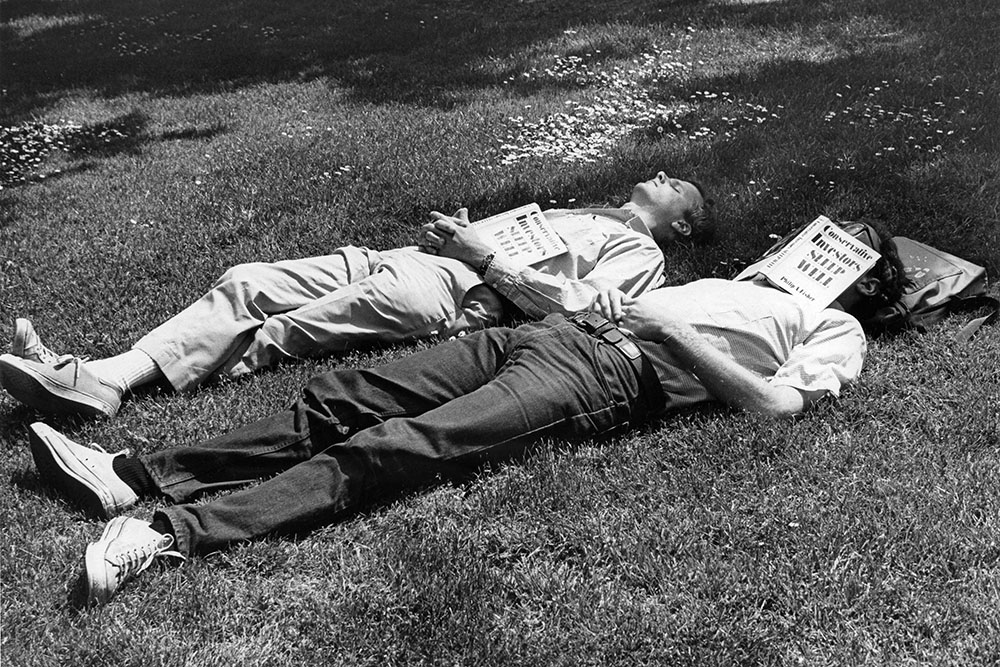
Many books written by GSB faculty have become seminal texts for both academic and general audiences. Included among them are Conservative Investors Sleep Well, by Philip Fisher, who dropped out of the GSB in 1928 yet later returned as a guest in investment classes.
Photo credits: Stanford archives
2025
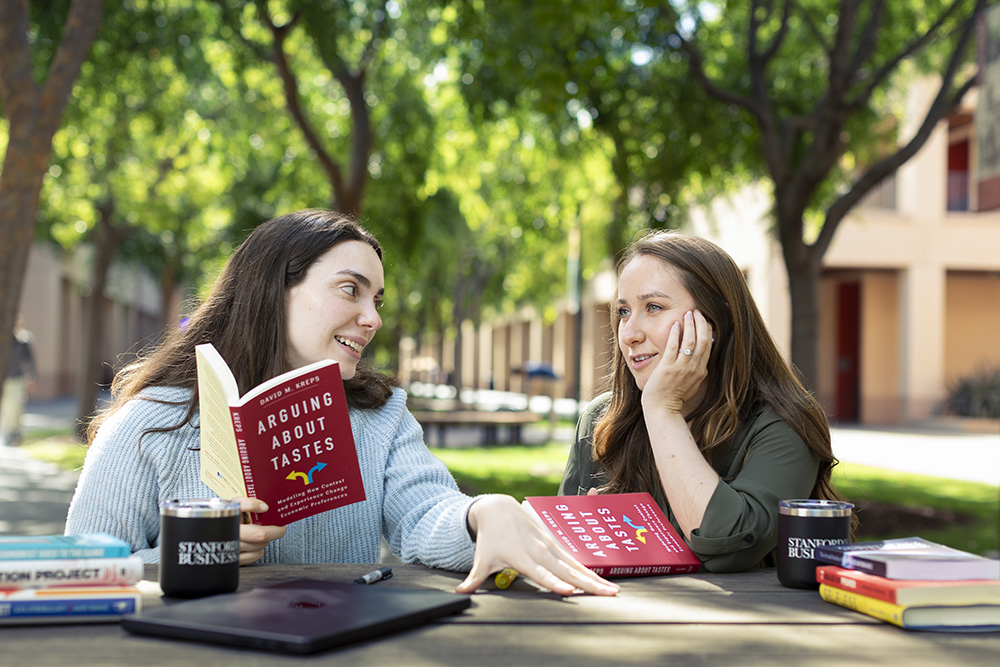
A more contemporary addition is Arguing About Tastes by economics professor David M. Kreps, a John Bates Clark Medal winner whose books have been translated into multiple languages.
Though technology has moved from desktops to laptops and students choose selfies over meeting at the The Flamebirds, the desire for community and connection has stayed consistent over the years.
Photo credits: @zhuchkin
Welcome to the GSB
c. 1933
The original “Graduate School of Business” sign above the school’s first library, which was formally inaugurated on April 3, 1933.
Photo credits: Stanford archives


2023
The current sign at the entrance of the Knight Management Center, where students and new admits can often be found taking their photos.
Photo credits: @zhuchkin
“See you at the birds”
1966
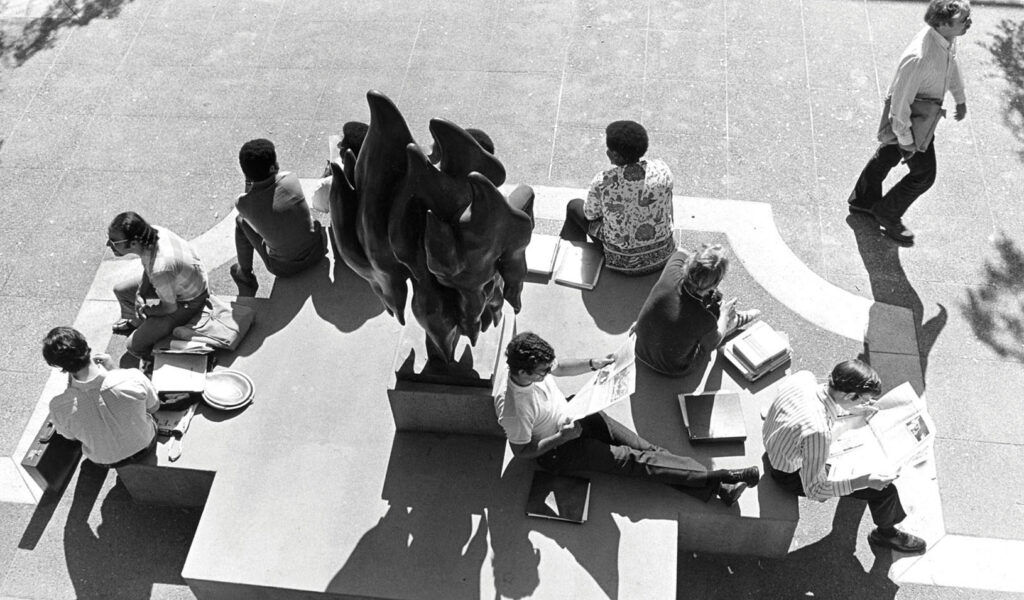
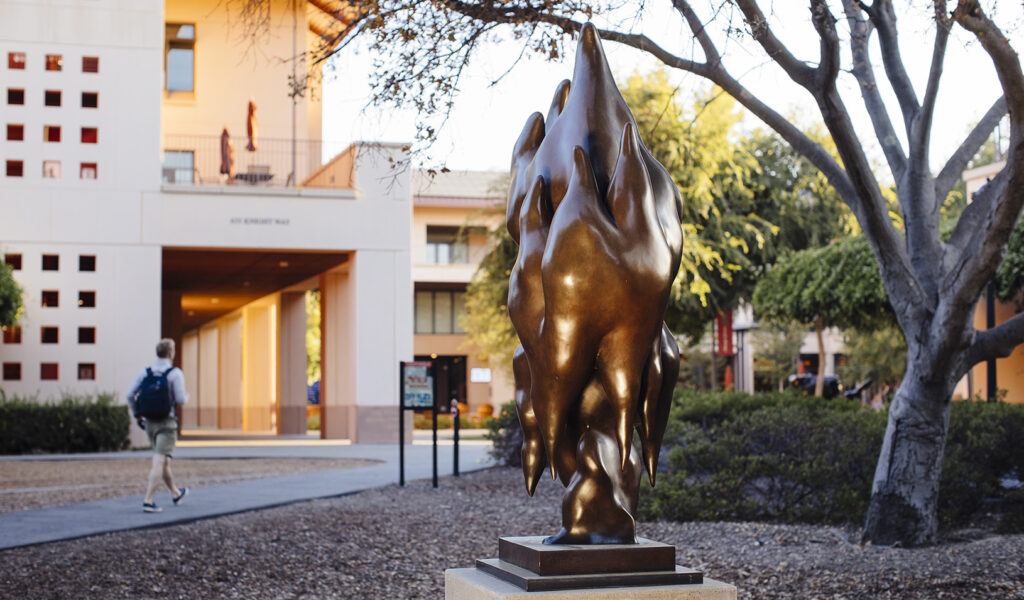
Since it was installed in 1966, The Flame Birds has been a focal point, meeting place, and symbol of unity for Stanford GSB. The birds were hatched by François Stahly, a German-French sculptor celebrated for his expressionist, organic forms, who made a stop at Stanford as an artist-in-residence from 1964 to 1965.
Photo credits: Stanford archives
2025
The birds perched in an unmissable spot in the main courtyard until it was announced in 2007 that the GSB was building a new complex. Today, the birds usher visitors into the southwest entrance of the Knight Management Center, where they cluster under a sun-dappled canopy of trees, poised for flight.
Photo credits: @zhuchkin
Dedicated to the things that haven’t happened yet
1996
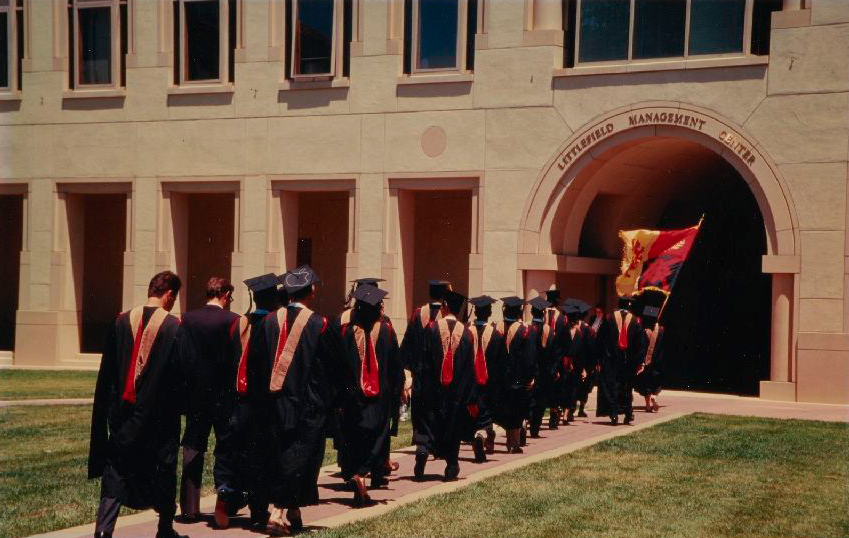
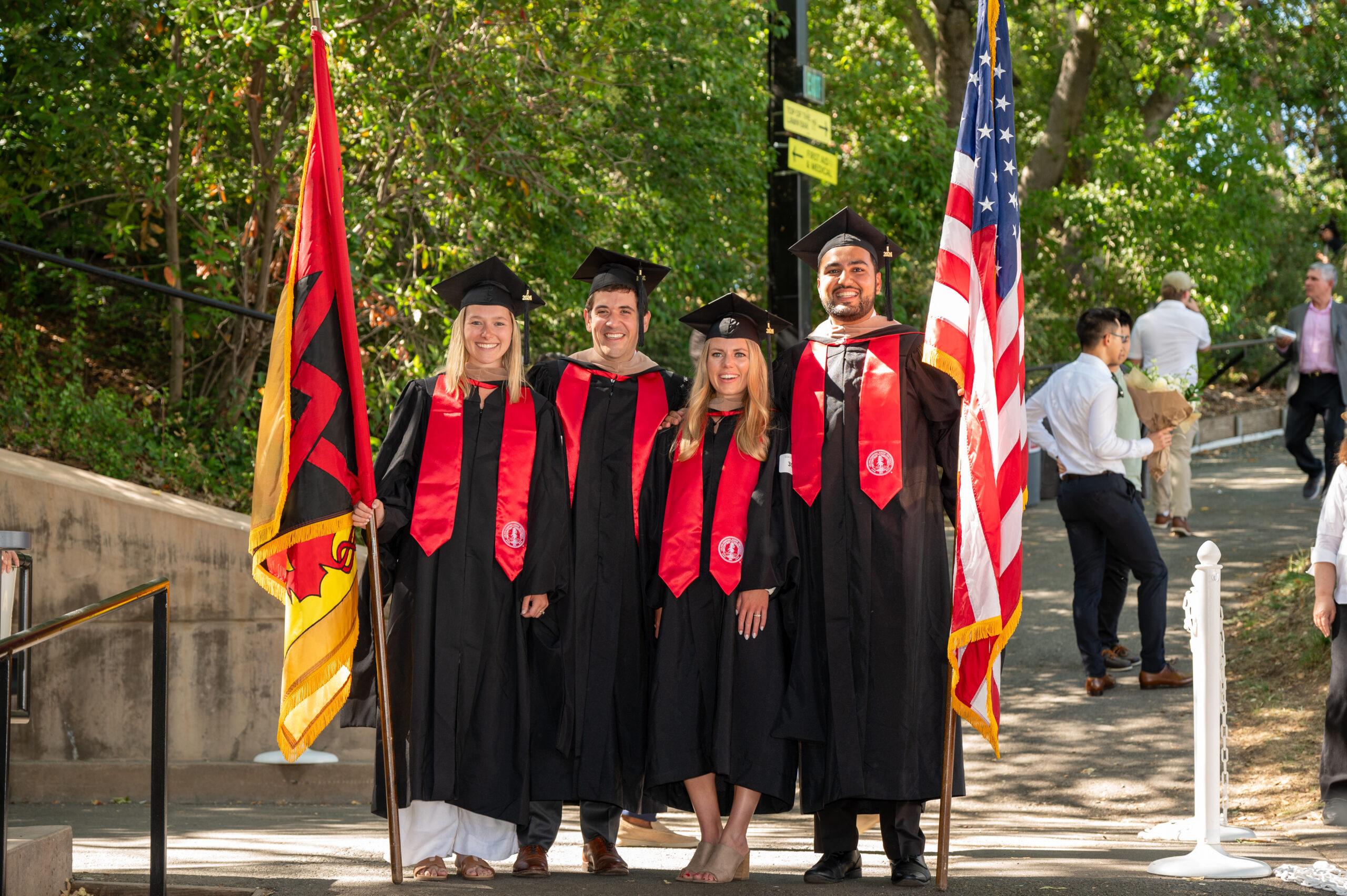
Graduates walk in the procession during the 1996 commencement behind the GSB flag. Fun fact: The flag carries a shield designed for the GSB in 1967.
Photo credits: Stanford archives
From chalkboards to digital
1980
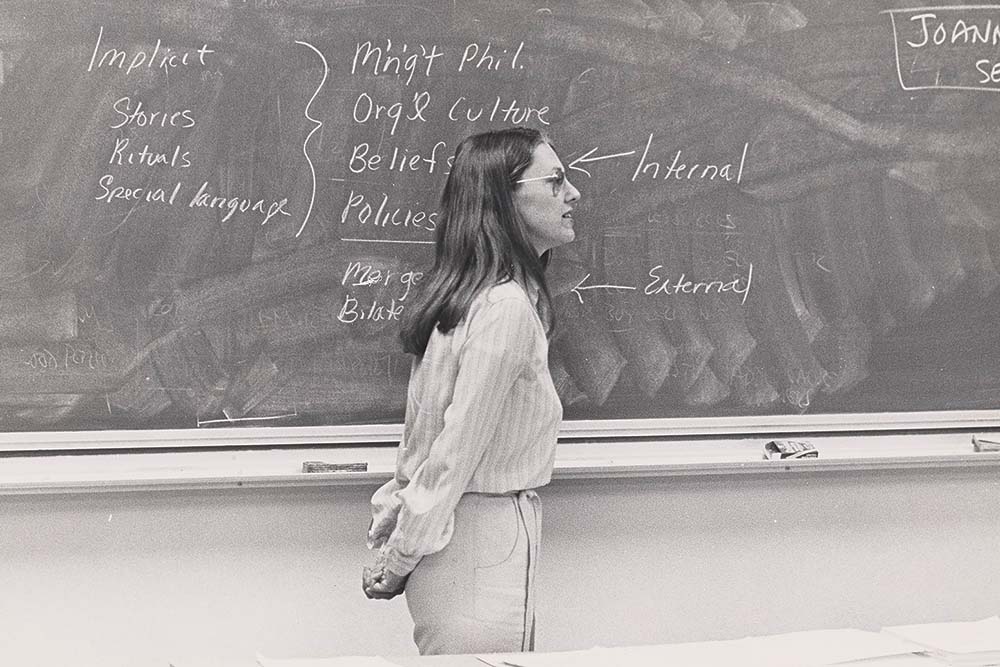
Classrooms in the old GSB complex had traditional chalkboards and uniform rows of desks, as shown here with Professor Joanne Martin in 1980.
Photo credits: Stanford archives
2024
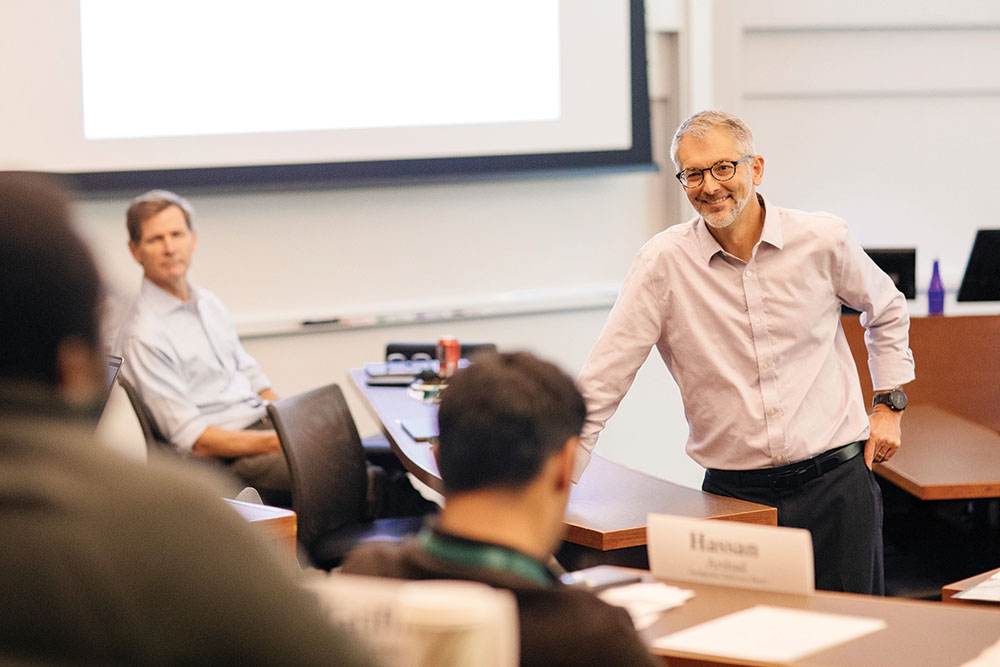
The GSB’s current home in the Knight Management Center was designed around collaborative spaces and flexible layouts, as demonstrated by Professors Ken Shotts and Steve Callander teaching an Executive Education course in summer 2024.
Photo credits: @zhuchkin
Teaching with power
1981
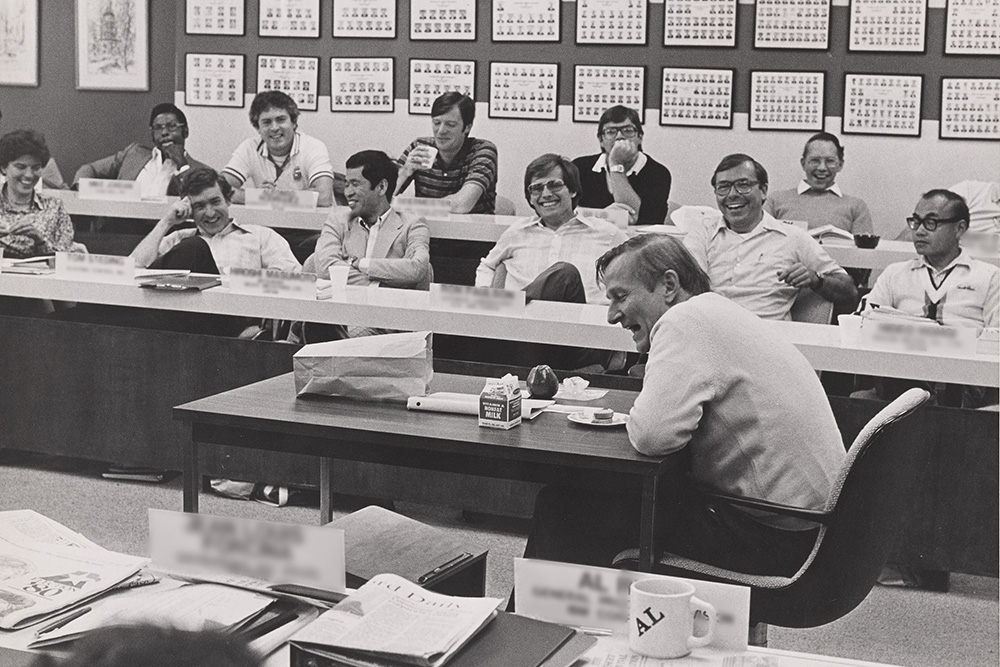
Former dean Rene McPherson, with Sloan Fellows in 1981
Photo credits: Stanford archives

2018
Deborah Gruenfeld, the Joseph McDonald Professor and Professor of Organizational Behavior, in her popular Acting with Power course
Photo credits: @zhuchkin
Uniform rows to flexible layouts
1976
David Harris, peace activist and former Stanford University body president, lecturing to a GSB class in 1976
Photo credits: Stanford archives
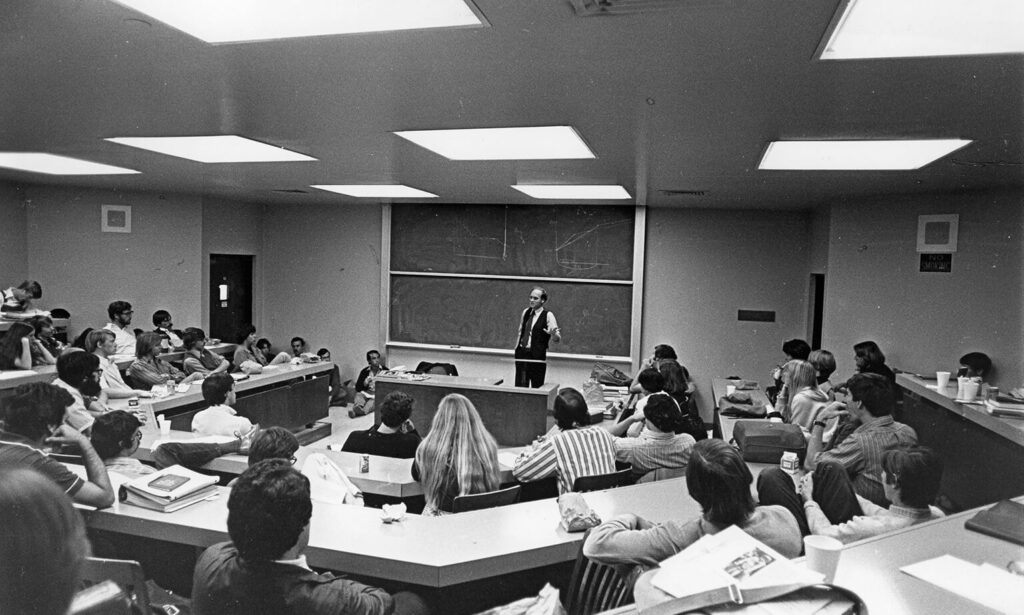

c. 2018
Kuang Xu, associate professor of operations, information, and technology, lecturing to a modern-day GSB class
Photo credits: @zhuchkin
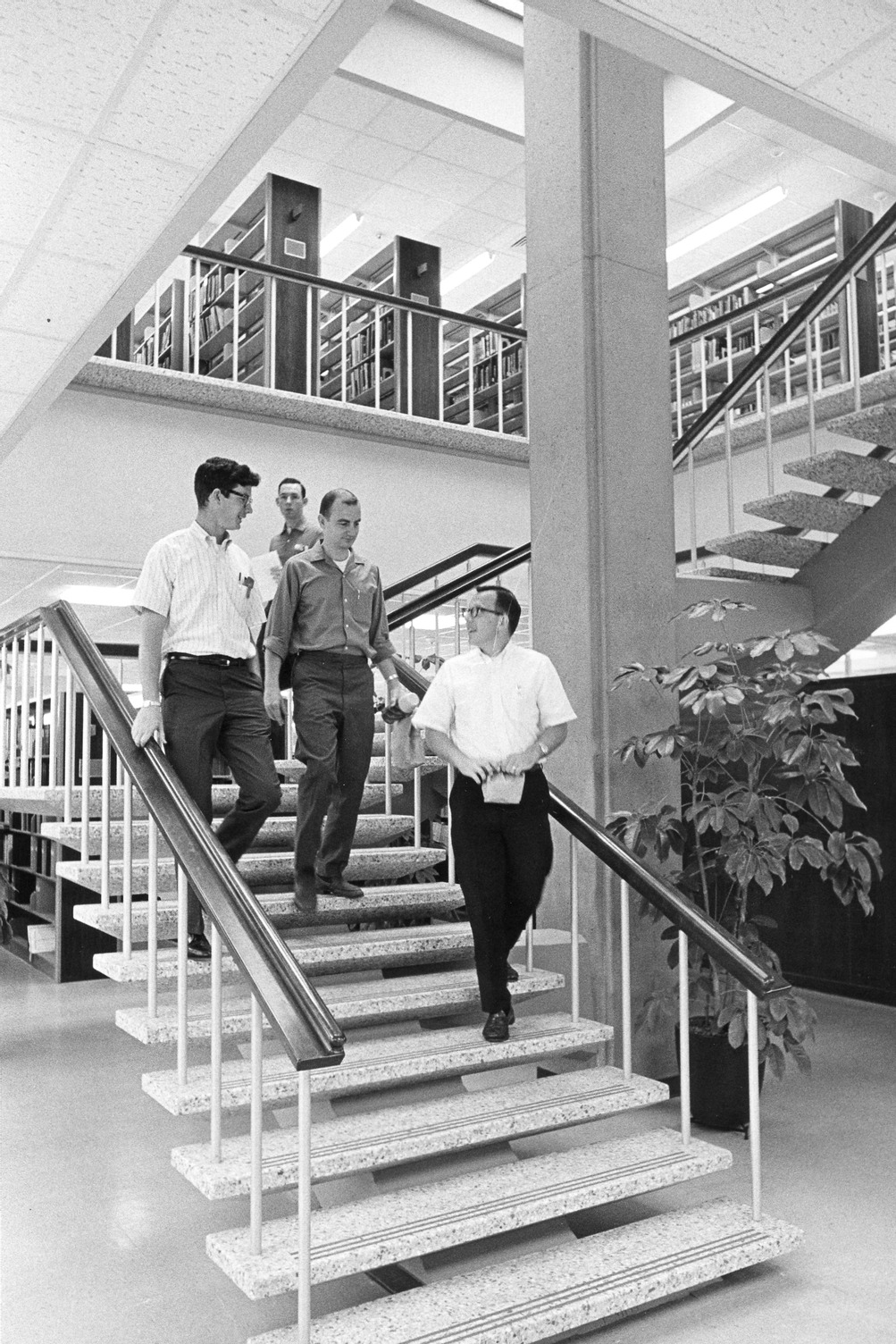
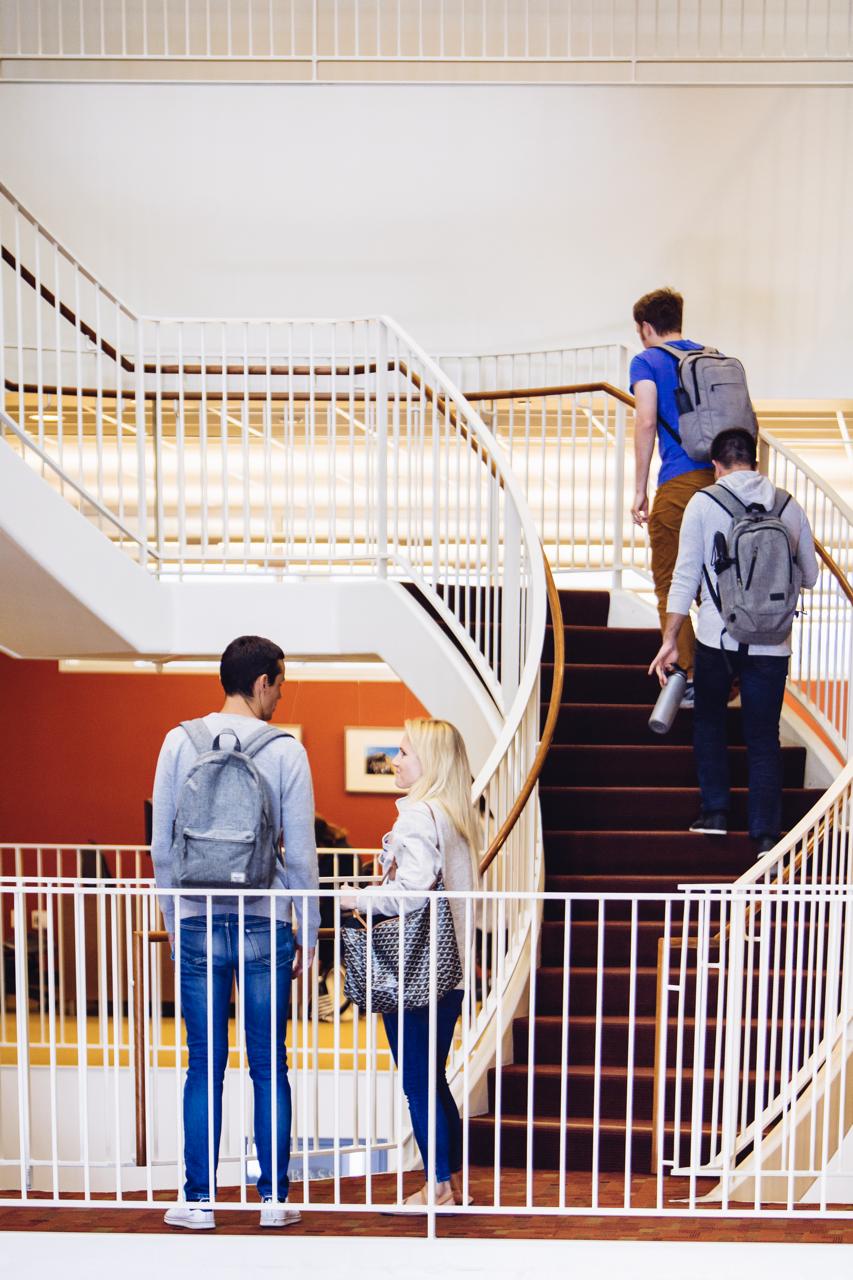
Jackson to Bass
1960s
In 1966, Jackson Library moved into the newly constructed Stanford GSB building between the Oval and Memorial Auditorium. Between 1967 and 1968, Jackson Library was used by 225,000 students, faculty, alumni, and business affiliates.
Photo credit: Stanford archives
2011
In 2011, Jackson Library was renamed the Stanford Graduate School of Business Library, and the library moved to the Anne T. and Robert M. Bass Center at the Knight Management Center.
Photo credit: @zhuchkin
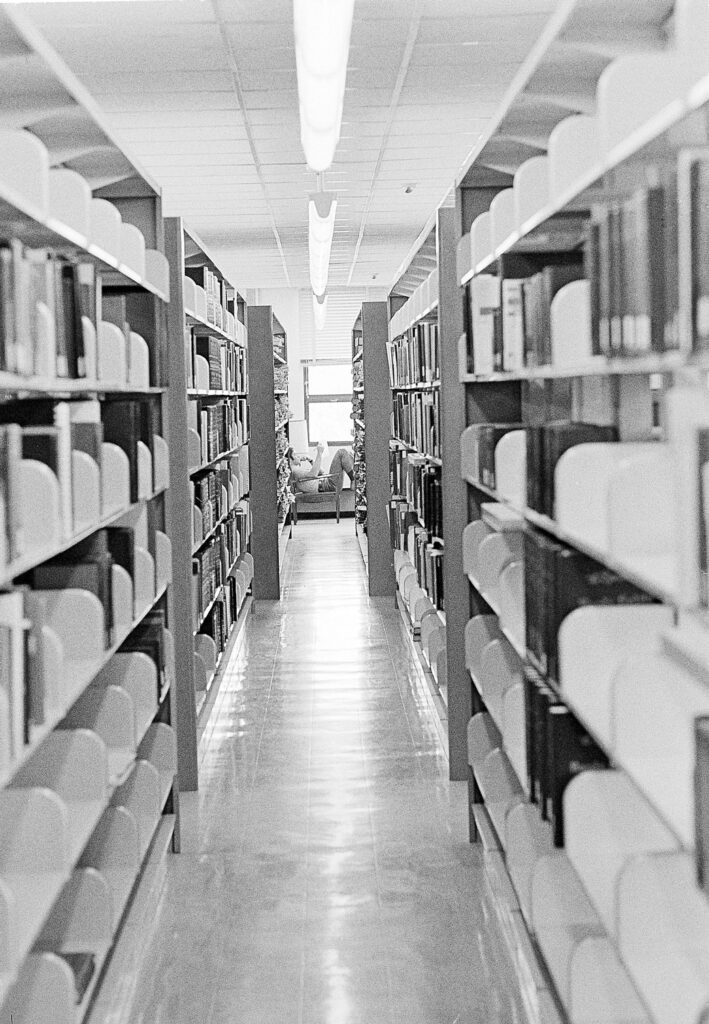
Shelf discovery
1970s
In the early 1970s, 273,806 students, faculty, alumni, business affiliates, and others used Jackson Library. For every hour that the library was open, an average of 85 people used it.
Library staff microfilmed the card catalog records to ensure their safety because protestors were damaging catalogs on other campuses.
Photo credits: Jose Mercado / Stanford News Service
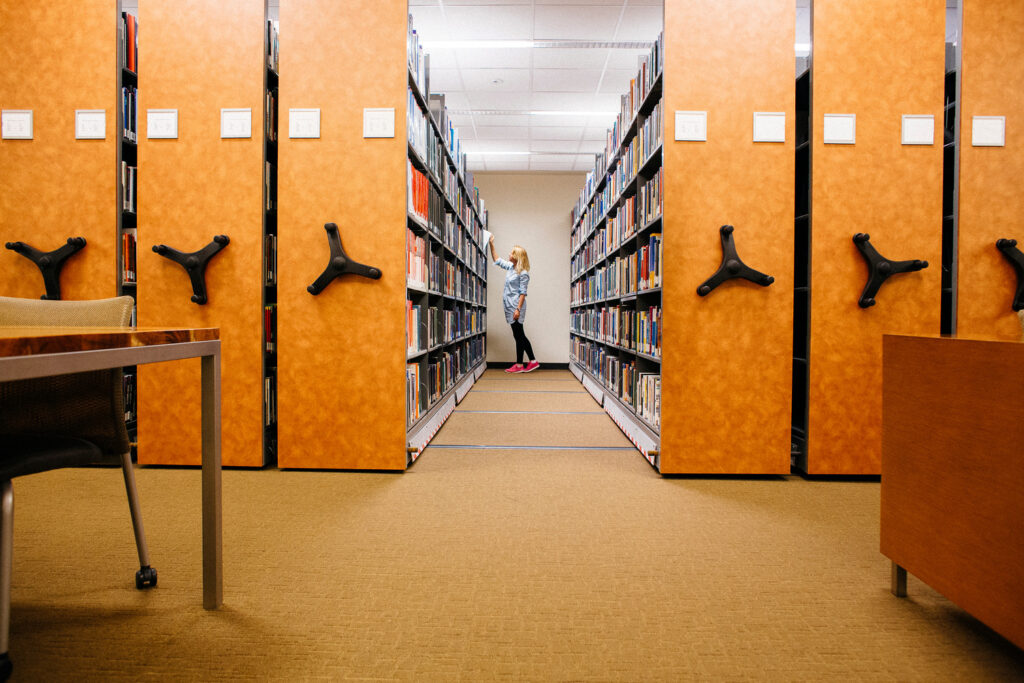
2020s
The library has around 10,000 physical items, including books, magazines, journals, newspapers, hard drives with data, and chargers. Its overall collection totals around 181,000 items, most of which are stored offsite.
In recent years, the most popular items checked out from the building’s physical collection fall into three main categories: Items on course reserve, interview preparation and career management books — Case in Point and Designing Your Life are very popular — and equipment, such as phone and laptop chargers.
Photo credits: Elena Zhukova
Follow Us
Stay in touch with what’s happening on campus and around the world as we celebrate 100 years of Stanford GSB.
And share how you’re celebrating. #gsb100